
Eagle Home Appraisal Snohomish
IRS step-up appraisals in Snohomish.
For an inherited Snohomish home, your tax adviser may need its value from an earlier date. Tell us the address, the date and what the report must support.
Snohomish, Washington
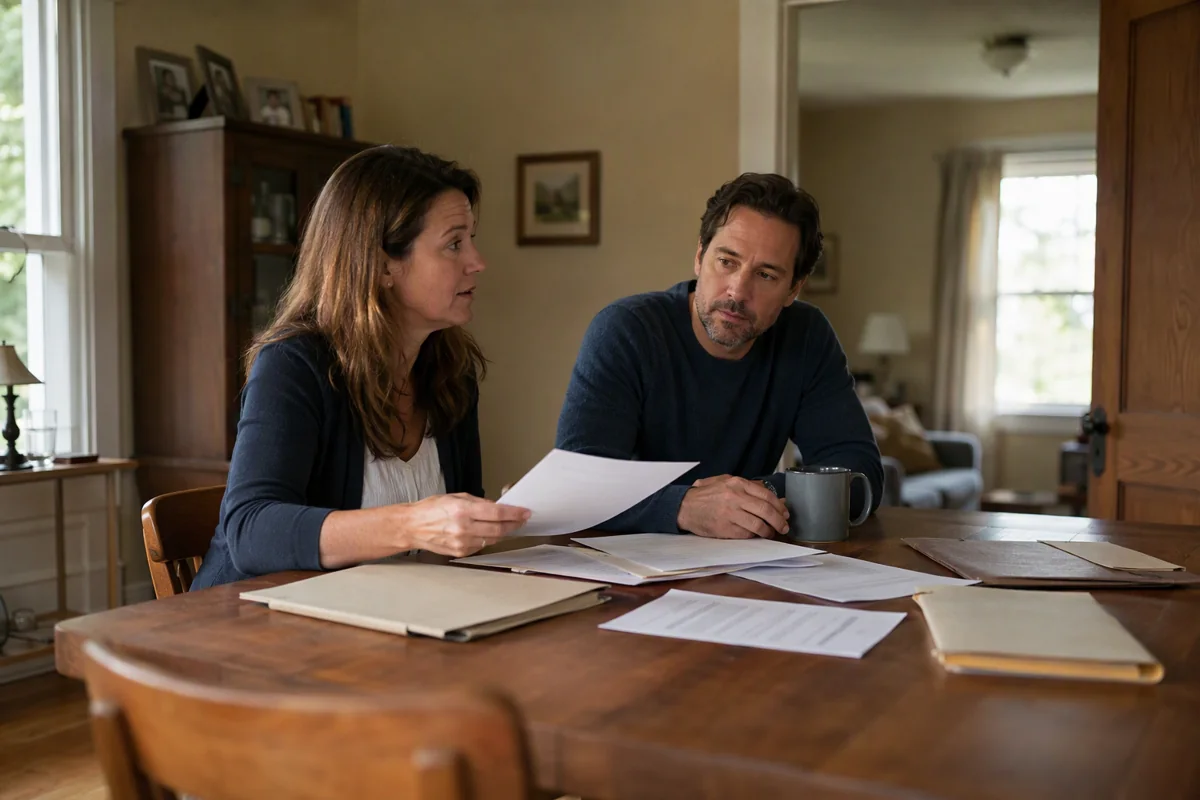
Your tax adviser may need the home's value from the day its owner passed away.
A retrospective appraisal looks back at the Snohomish home and the market as they were on the date your adviser names. If the home has changed since then, dated photos and records can help. Start with the address, the date and your adviser's instructions.
Request a retrospective appraisal quote · Call (425) 287-5343
What to gather before asking for a quote
- Street address, and what sort of home it is
- Tells the appraiser which sales to study
- The owner's date of passing, plus any date your adviser names
- Tells us which date the value needs to reflect
- How title was held, for example as community property
- Lets your adviser frame the request; deeds are recorded with Snohomish County Recording
- Dated photos, invoices and listing records
- Helps show what the home was like on the date being valued
- Who will use the report: you, your CPA, the estate
- Lets us agree who needs to use the report before work begins
- Who can open the house, and any filing deadline
- Helps us plan access and delivery
A past-date valuation in four steps
- Share your adviser's instructions. Tell us about the home, why the value is needed, who will use the report, the date and your deadline. You will receive a written scope, fee and delivery estimate before work starts.
- Gather the home's history. Arrange access if an inspection is needed and share records of its features and changes since the date being valued.
- Look at the market then. The appraiser gathers sales and market data from around that date and explains in the report how they support the value.
- Read the report against your instructions. Check that the report uses the date your adviser asked for and states how it will be used. Read the assumptions and send any factual corrections to the appraiser.
USPAP governs how the report is prepared, but the IRS, a court or another reader can still question it, and the appraisal itself decides no tax result.
Fees and timing for retrospective work
Ask for a written scope, fee and delivery estimate. A past effective date usually takes more research than a current one, and size, complexity, access and your deadline also affect the fee and schedule. A value from that date may also serve a probate inventory or a Washington estate tax return; see probate appraisals and estate appraisals, and ask your adviser whether one report can serve each use.
What a past-date value depends on
Which date?
Usually the day the owner passed away, though your adviser may name an alternate valuation date. If an inspection is needed, it happens now; the value is reported as of the earlier date.
Which condition?
A home can change after its owner passes away: furniture is removed, repairs are made, rooms are updated. Dated photos, prior listing details, inspection reports and invoices show what the appraiser should treat as the condition on the effective date.
Which market?
Comparable sales and market conditions from around the effective date, not today's listings. Later records can still help establish earlier facts; the appraiser explains which evidence was used and why.
What the basis rule says
For inherited property, the IRS generally uses fair market value at the owner's death as the heir's starting basis (IRS guidance on gifts and inheritances). If you later sell the home, your tax adviser can determine the adjusted basis and whether the sale produces taxable gain. When an estate makes the section 2032 alternate valuation election, the alternate-date value takes the place of the date-of-death value (26 U.S.C. 1014). The same IRS page notes that, in certain cases, an heir's basis must be consistent with the value finally determined for federal estate tax purposes.
The rule uses the date-of-death value whether it is higher or lower than what the owner originally paid, so a "step-up" appraisal reports a value, not a guaranteed tax saving. Your tax adviser should name the date and the use before you order.
Washington community property and the surviving spouse
Property a married couple acquires during the marriage is generally community property in Washington (RCW 26.16.030), and Washington appears on the IRS list of community property states (IRS Publication 555). Federal law has a further rule for married couples. Under section 1014(b)(6), the surviving spouse's own half of community property can be treated as acquired from the person who passed away, provided that at least one-half of the whole community interest was includible in determining the value of that person's gross estate. Publication 555 explains that, in that case, the fair market value of the whole community property, including the survivor's part, generally becomes the basis of the entire property. It also says this rule does not apply to registered domestic partners.
The appraisal can report the value of the whole home as of the date of death; your tax adviser decides how the basis rules apply to it. If you and your spouse owned the home as community property, ask your tax adviser how those rules apply before relying on a basis figure.
Inheritance tax: there isn't one here
There is no federal inheritance tax, and Washington has none either (DOR estate tax FAQ). Congress taxes the taxable estate's transfer instead, and the executor settles that bill (tax code section 2001 and section 2002). The IRS estate tax page sets the 2026 filing line at $15,000,000 of gross estate and some lifetime gifts, which the IRS estate tax FAQ states for a U.S. citizen or resident who died in 2026; below that line a federal return is generally not needed. An inheritance generally isn't counted as the heir's income, though rent the home earns afterward is taxable (IRS Publication 525).
Washington does have its own estate tax, with a filing threshold that depends on the date of death; the figures are on our estate appraisals page. A Washington-only alternate valuation election is a state matter; whether it has any bearing on federal basis is a question for your tax adviser.
Assessed values and monthly medians are different numbers
The Snohomish County Assessor updates assessed values each year, and those values represent market value as of January 1 of the assessment year (Assessor; Tax Statement vs Assessed Value Notice). That figure is set for property tax on a fixed date, rarely the date your adviser needs. The September 2026 sale figures on our Snohomish neighborhood guide describe a month of sales across RPR's Snohomish reporting area. Neither one isolates a single home's condition and features on the date your adviser needs.
Start with the home and the effective date
Send the Snohomish address, the date your adviser named and any deadline. We can explain the scope and give you a written quote.
Request a retrospective appraisal quote · Call (425) 287-5343
Eagle Home Appraisal Snohomish